Smart technologies are revolutionising workplace safety: reducing accidents and injuries, preventing musculoskeletal disorders and improving employee wellbeing.
The development of so-called ‘smart PPE’ is enabling better risk monitoring and data analysis, allowing employers to detect potential problems early, as well as to respond faster when incidents occur.
What is smart PPE?
The term ‘smart PPE’ refers to items of personal protective equipment that are embedded with technology to identify and monitor hazards, assess risks and prevent or minimise harm during potentially dangerous workplace tasks.
Built-in devices including sensors, cameras and microphones collect data about the wearer and their working environment, including posture, movements, heart rate, location, temperature, vibration, noise and air quality.
That data is then transmitted to a connected platform, from where it may be analysed.
In some instances, this may result in real-time alerts that can be used as a preventative tool to change behaviours to avoid an accident or injury, or to notify someone in the event of an emergency. In others, the data exists for analysis by risk managers and other health and safety personnel for the purposes of ongoing risk assessment and management.
Smart PPE in the workplace
Examples of smart PPE already in use in UK workplaces include:
-
Wearable technologies like smart watches and bracelets, which monitor the wearer’s physical state in real time
-
Smart belts that deploy real-time safety alerts to correct wearer posture during bending and lifting tasks
-
Smart insoles and hardhats which can detect unusual movements or non-movements in the event of an incident and issue alerts in an emergency
-
Safety harnesses used by construction workers that can monitor fatigue and warn of fall risks
-
Complete exoskeletons or exosuits which reduce wearer fatigue and help prevent injuries by providing mechanical assistance with strenuous tasks. These devices can also be fitted with sensors to capture granular data on high impact repetitive activities carried out by the wearer – such as bending, twisting, stooping, crouching, reaching and carrying – to enable better risk analysis
As well as monitoring the wearer, items of smart PPE may be fitted with additional sensors to evaluate the working environment, warning of the presence of gases or other hazardous substances, as well as excesses of heat and cold.
Smart PPE is already used in workplaces across many industries, including construction, manufacturing, oil refining and chemical manufacture.
Smart PPE: The benefits
Employers that choose to equip their teams with smart PPE may benefit in many ways through the real-time hazard detection it offers.
Fewer accidents and injuries
By continuously monitoring the risks to individual workers posed by the activities they are carrying out at any one time as well as their working environment, smart PPE allows employers to anticipate potential incidents and intervene to correct situations before they escalate to the point of injury.
For example, smart belts worn by people working near forklifts can warn them of the presence of nearby vehicles, while at the same time sending an alert to the driver’s in-cab display to encourage them to proceed carefully. This may be particularly useful in workplaces where there are blind corners or visibility is otherwise reduced.
Less disruption
Smart PPE can provide the real-time decision support that encourages wearers to behave more safely during high-impact, repetitive actions like lifting, carrying, stooping, twisting, kneeling, crouching, and certain production line assembly or packing work. By issuing alerts when users carry out unsafe movements, it encourages the wearer to change their behaviours over time, reducing the risk of them developing a musculoskeletal condition – one of the biggest causes of sick days and lost productivity in UK workplaces.
Better employee wellbeing
Wearable technologies can help to improve employee wellbeing by monitoring the temperature, light and noise level of the working environment and nudging them to take a break when they have reached the maximum recommended exposure time. Employee heart rate monitoring may also help to detect stress at work.
Improved incident response
Data from smart wearables that pinpoints the location of individuals within the workplace may prove invaluable in an emergency, enabling employers to track who is still in the building in the event of a fire or other incident requiring an evacuation.
Improved compliance
When used as part of a programme of proactive health and safety management, smart PPE can support overall organisational compliance with health and safety regulations.
For example, location data from smart devices may be used alongside Bluetooth beacons in the workplace to restrict entry to hazardous areas to only those who have undertaken the required safety training.
A more proactive approach to health and safety management
AI algorithms may be used to analyse historical data on manual handling tasks, the working environment and injury records to quickly identify patterns and make connections, enabling employers to identify health and safety weaknesses and target their training and measures accordingly.
Smart PPE: the future of workplace safety?
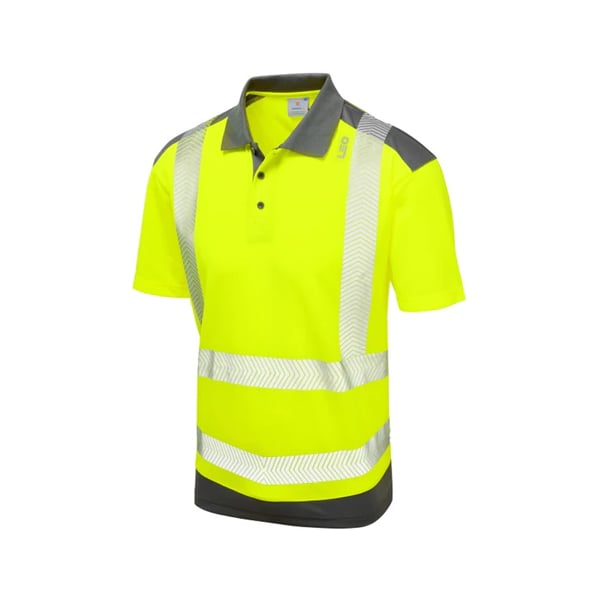
The potential for smart PPE to revolutionise the future of workplace safety is clear, and it may not be long at all until the likes of smart belts, exoskeletons and wearable technologies are as common in UK logistics workplaces as safety boots, hard hats and hi-vis jackets.
But, despite its many benefits, employers looking to implement the technology should also be aware of challenges including the potential for so-called ‘alert fatigue’, and over-reliance on automated warnings replacing situational awareness and attention.
For this reason, it should be seen as a tool to complement existing health and safety frameworks, rather than as a replacement for anything an organisation is already doing to keep its employees safe at work.
Interested in finding out more about smart PPE and how it could help your business? Get in touch and we’ll be happy to chat more about the options!




 Posted 12 Mar 2026
 1
1
 2
2
 3
3
 4
4